As we navigate the current technological landscape, the artificial intelligence sector has definitively shifted from theoretical training to relentless, continuous inference. Generative AI is now woven into the fabric of global enterprise, running autonomous agentic workflows, complex biological simulations, and real-time financial data synthesis. However, this triumphant software evolution has collided with an immovable physical barrier: thermodynamics.
The data center industry is currently grappling with a dual-front crisis known as the “Grid Crunch” and the subsequent obsolescence of traditional thermal management. For IT leaders, hardware vendors, and cloud architects, understanding this infrastructure inflection point is no longer optional—it is critical for survival in the modern AI economy.
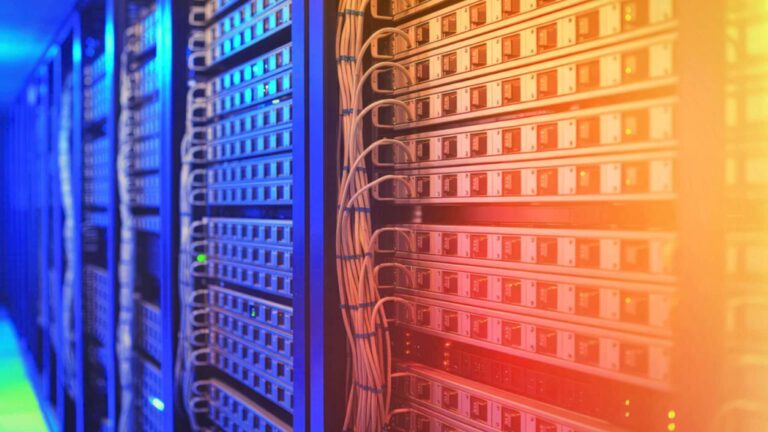
The 100 kW Reality and the Severed Grid To understand the scale of the current bottleneck, one must look closely at the silicon. Next-generation AI accelerators and GPUs are now routinely drawing between 700 and 1,200 watts per individual chip. When clustered into high-density configurations to minimize latency, modern AI racks are pushing well past the 100-kilowatt (kW) threshold. To put this in perspective, just a few short years ago, a standard enterprise rack operated comfortably at roughly 10 to 15 kW.
This exponential leap in power density has completely overwhelmed existing municipal power grids. In Tier 1 data center markets—such as Northern Virginia, Frankfurt, and Silicon Valley—utility providers simply cannot provision power fast enough. Interconnection queues have stretched from standard wait times of a few months to an agonizing multi-year backlog, with some major grid operators warning of connection delays stretching up to seven or eight years. Providers are finding that while the capital to build facilities exists in abundance, the actual electrons do not. The grid crunch has transformed electricity from a predictable utility into the single most sought-after commodity in the tech sector, with some upcoming AI data center campuses demanding over a gigawatt of power—roughly equivalent to the output of a modern nuclear reactor.
The Rise of Behind-the-Meter Power Faced with these multi-year utility delays, the industry has aggressively pivoted toward “behind-the-meter” power generation. Data centers are no longer operating just as passive consumers of energy; they are effectively being forced to become independent power plants.
To circumvent grid limitations, operators are deploying advanced microgrids directly on-site. We are witnessing a massive, industry-wide surge in the installation of natural gas turbines and industrial-scale solid oxide fuel cells to provide primary baseload power. Furthermore, to manage peak inferencing loads and ensure uninterruptible service, facilities are colocating massive Battery Energy Storage Systems (BESS). There is also growing, serious investment in small modular reactors (SMRs) as a long-term, carbon-free solution. This “bring your own power” model requires significantly higher upfront capital expenditure. However, it guarantees operational autonomy and vastly accelerates speed to market—a crucial trade-off hyperscalers are more than willing to make to keep their AI factories humming.
The End of the Line for Air Cooling Generating the power is only half the battle; mitigating the resulting heat is the other. The laws of physics dictate that the massive electrical load consumed by these 100 kW racks is converted almost entirely into thermal energy. We have now officially reached the physical limits of traditional forced-air cooling. Pushing colder air faster down enclosed server aisles is no longer sufficient to keep high-density silicon from suffering immediate thermal throttling or catastrophic hardware failure.
Consequently, liquid cooling has transitioned from a niche, high-performance computing (HPC) luxury to a mandatory baseline requirement. Water and engineered dielectric fluids possess a heat capacity thousands of times greater than air, making them the only viable medium for stabilizing modern AI infrastructure.
Two primary architectures now dominate the data center floor. Direct-to-Chip (D2C) cooling, where micro-convective cold plates circulate liquid directly over the CPU and GPU dies, has become the gold standard for retrofitting existing facilities. Meanwhile, purpose-built AI data centers are increasingly adopting single- and two-phase immersion cooling. In these setups, entire server chassis are submerged in non-conductive, engineered fluids, achieving near-perfect thermal transfer and entirely eliminating the need for server fans.
A New Era of Sustainable Infrastructure Beyond merely saving the hardware from melting, this liquid mandate is driving down Power Usage Effectiveness (PUE) ratios, freeing up more of the precious, self-generated electricity for actual computing. Moreover, closed-loop liquid cooling drastically lowers Water Usage Effectiveness (WUE) compared to traditional evaporative cooling towers, which is vital as data centers face pushback in water-stressed regions. The high-temperature fluid exiting these AI racks is increasingly being redirected to heat nearby municipal districts or agricultural facilities, adding a layer of vital sustainability to these operations.
The modern cloud environment looks fundamentally different from the start of the decade. The AI supercycle has forced an unprecedented integration of advanced power generation and complex fluid dynamics directly into IT operations. The facilities powering our digital future are now highly specialized, liquid-cooled micro-utilities. For enterprises looking to deploy next-generation AI workloads, success now hinges not just on software architecture, but on securing space in these thermally optimized strongholds.